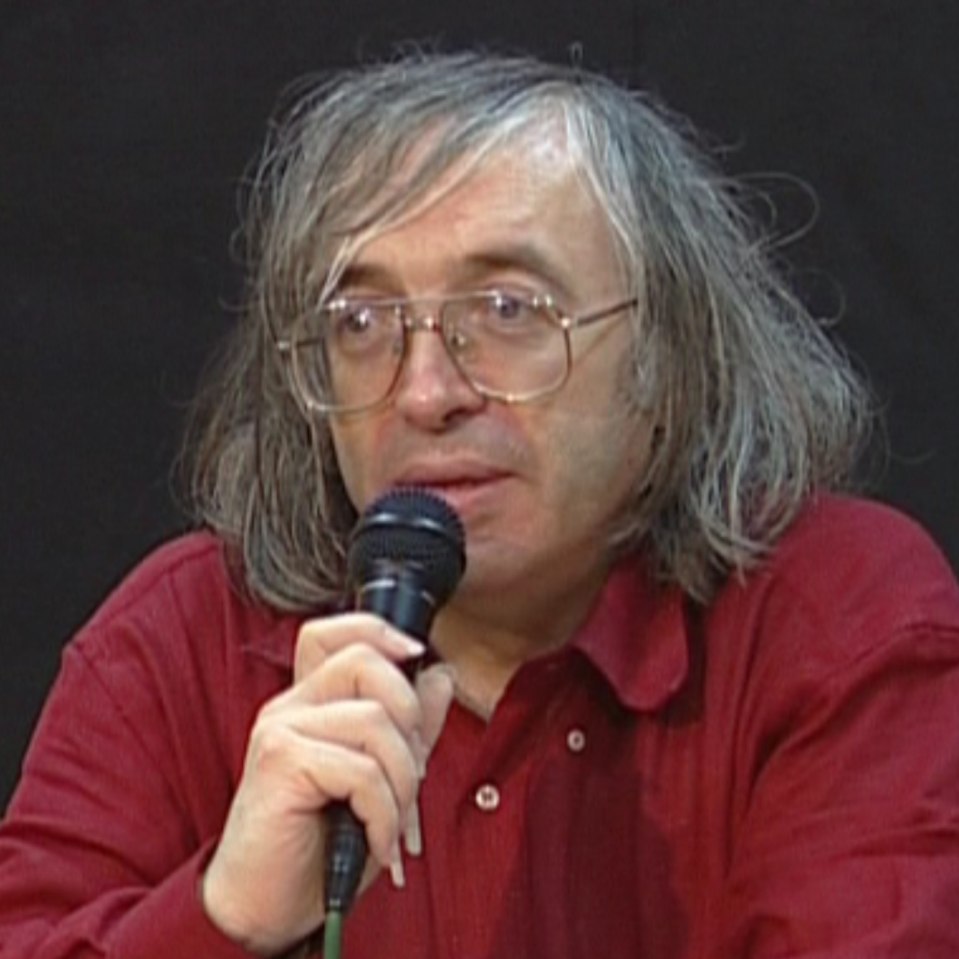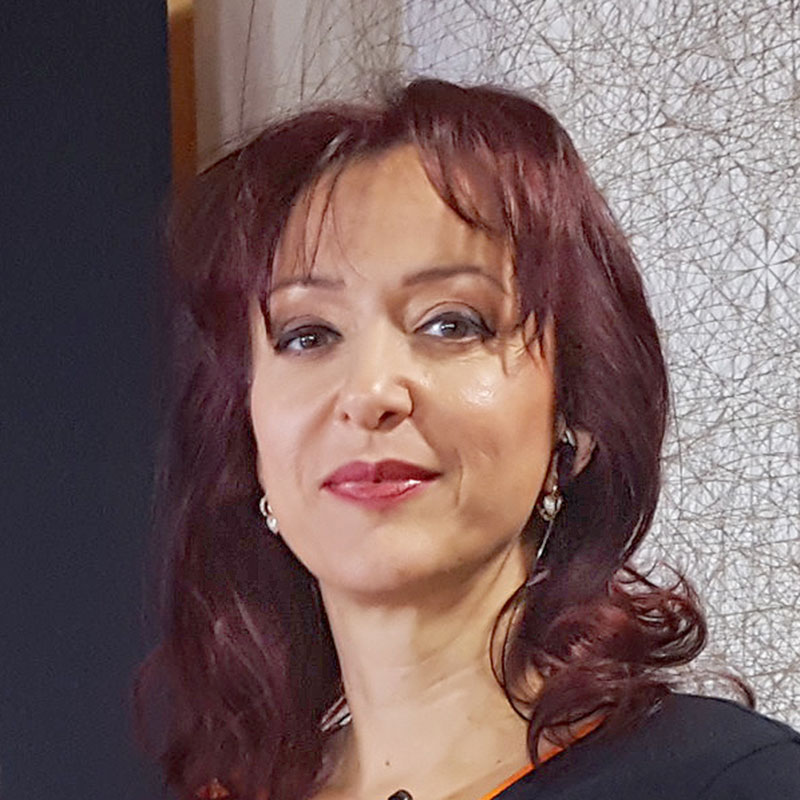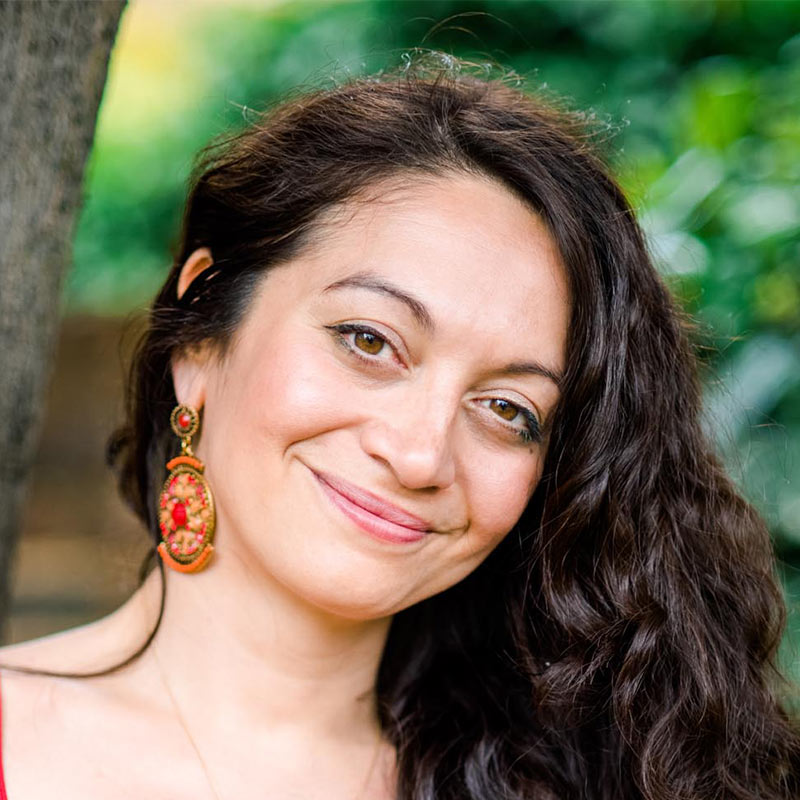
We are pleased to present a very inspiring programme that will include talks, workshops and a podium/panel discussion, as well as an artistic event. As part of the interactive aspect of the Congress, we invite participants to take part in the round of questions after each talk and in our famous International Yoga Contest “Competition for Promoting Spiritual Values” (in MahaYoga Zentrum on Sunday, December 2).
The Saturday morning sessions will be dedicated to medical research in the field of yoga and applied resonance. We hope that this session will give new valuable information both to doctors and to patients in the relatively new field of integrative medicine.
Saturday evening the main speakers of the congress will be invited to a panel discussion, in order to create a complex and interconnecting view upon the topics of the Congress. Speakers will aim to connect the subjects so they can be understood coherently from traditional, scientific, medical and psychological perspectives.
Apart from the scheduled programme the Congress provides an opportunity to socialise with yoga enthusiasts, acquaint yourself with leading European teachers of yoga and spirituality, and to network with new contacts for upcoming scientific projects and studies.
This year the talks in each session will be limited to 30 minutes, except from the invited talks. As the activities will happen in two halls and you will have to choose which of them you want to attain, we hope to give you a fast overview on this page about the structure of the programme. Places in the halls cannot be booked in advance but are given on first show first served base.
You can open the detailed description of each event by clicking on the triangle in front of the title.
[toggle-all]Or simply open/close all descriptions[/toggle-all]
Friday, 30.11.2018, Evening |
||
| Main Hall | Speaker | Title |
| 16:00 – 16:30 | Organizer | Opening festivity |
| 16:45 – 17:15 | Uplift | The science behind Yoga |
| 17:30 – 18:45 | Nicolae Catrina | [toggle-title]Spanda, a key concept for the Science of Ultimate Reality[/toggle-title] |
| [toggle-content expand=0]According to both esoteric wisdom of Tantra Yoga and modern science, all and everything is vibration, the reality we live into is a vibrating Universe. The ancient concept of Spanda (i.e., the primordial creative vibration) – that is fundamental to the Tantric school of Kashmir Shaivism – describes the universe as the outpouring of the playful nature of God’s Consciousness through waves, vibrations, resonances. The entire endless range of vibrations (physical, subtle, mental, etc.) and the very dynamic of our consciousness have as substratum the fundamental, universal Vibration – Spanda, which is mysteriously present in all our emotions, thoughts, perceptions, but also in our body, in the entire outside world, etc. For this reason, Spanda offers direct and immediate ways for Self-revelation and it is accessible at any level, in any experience, perception, movement etc. We just need to learn how to recognize it. Thus, Spanda is a key philosophical, spiritual, scientific and practical concept, that allows us to use everyday life as a “springboard” to enlightenment and to realize that our entire life may be a spiritual path, a godly revelation, a gateway to the Ultimate Reality.[/toggle-content] | ||
| 20:00 – 20:30 | Christi Secarea, Prof. | [toggle-title]Mathematics and Spirituality – The Path of Discovering the Infinity Within[/toggle-title] |
| [toggle-content expand=0]Spirituality is the science God revealed to mankind in order to discover the Infinity within our hearts and to expand our consciousness towards the unlimited. Mathematics seems for many to be an abstract and lifeless science. This talk will be about the beauty and poetry of Math, its connections to spirituality and its ability to reflect and unravel the mysteries and the inner mechanisms of the outer world in our mind. What is Math about? It is about understanding Infinity, discovering the creative abilities of human mind but also about the desire for aesthetic perfection. Math is the poetry and music of reasoning and we will discover together that, as Paul Dirac said “God used beautiful mathematics in creating the world”. Mathematics is a wonderful place which is worth to discover. We will understand that Mathematics and Spirituality are not opposite, are not even complementary, they are both the language of knowledge unraveled to mankind on his path towards Infinity.[/toggle-content] | ||
| 20:45 – 21:45 | Doru-Beniamin Bodea, PhD | [toggle-title]Where Quantum Physics meets Yoga: seeking a common conceptual language for science and spirituality[/toggle-title] |
| [toggle-content expand=0]There have been already many attempts to bridge science and spirituality, and in this direction Quantum Physics occupies a privileged place. This modern branch of physics seems to provide the basic issues needed to formulate a more grounded and why not scientific language for describing spiritual experiences in particular and spiritual systems in general. One simple reason for this can be found in the similarities existing between the problems encountered when aiming to define consciousness – unarguably the background concept of any spiritual discipline – and those appeared when building the conceptual foundation of quantum mechanics. In quantum mechanics a certain new aspect of reality “appears” as observable due to a quantification (state reduction) process without needing any causal explanation. The self-reflection capacity of consciousness represents the very mechanism of “appearing” of a certain new aspect, requiring no causal account of reality. Due to its already very wide development, quantum mechanics set aside the structural limitations of the classical framework previously used for addressing the factual reality and built its own rich and multivalent formalism. Yet, despite its complexity, this formalism has extremely rigid axioms and is not easily adaptable to systems which are not conform to them. Thus, it has been rarely applied in the context of consciousness. Generalized Quantum Theory (also known as Weak Quantum Theory) was meant to “loosen” a bit these axioms, still retaining some of the important concepts like complementarity, non-commutativity or entanglement. The aim of this talk is to analyze some of the fundamental principles of the yoga system (and consequently the possibilities to study them) in the very promising framework of generalized quantum theory.[/toggle-content] | ||
| Studio | Speaker | Title |
| 20:00 – 20:30 | Swami Mahalayananda | [toggle-title]Nada, the sound of silence of the Supreme Heart[/toggle-title] |
| [toggle-content expand=0]The Path of Light and Sound sometimes referred to as “Surat Shabda Yoga”, “Union of the Soul with the Essence of the Absolute Supreme Being, Atman.”bWe exist in a universe essentially purely made of vibration, a fact that both the spiritual traditions of our planet as well as front line science agree about. At the beginning of it all was the word, or the Pranava mantra as the yogic tradition calls it. The primordial impulse, throb or vibration called Spanda expresses itself and vibrates as the primordial sound Nada and is at the basis of the creation of the universe. Nada is by Indian initiatic music considered the basis of all music where the notes of the musical system are considered variations of this Nada, as are the phonemes of the Sanskrit alphabet. Nada is related with the so-called music of the spheres and can be experienced within as a primordial basis of our being. It is the mystical movement of the creative void, of the pure existence that brings the universe into existence. Through the practice with Bija mantras using the Laya yoga technique for instance we can directly enter into this sphere of vibratory consciousness. In our spiritual heart we also have a gate to this which effortlessly gives rise among other things to profound mystical experiences. If we can call the I am’ness the father of the universe, Nada is the mother of the universe, the purest expression of love.[/toggle-content] | ||
| 20:45 – 21:45 | Maria Blandine Wegener, BA | [toggle-title]Pancha Kosha, the five bodies, in the light of science[/toggle-title] |
| [toggle-content expand=0]As science advances, research offers more and more interesting proof of the millennial old ideas of the yoga tradition. The Pancha Kosha (sanskrit for “five bodies”) is an ancient system that describes the subtle anatomy of the human being with layers of energy flow, the astral dimension of dreams, the realm of the psyche and more, suggesting that there are different levels of resonance that our being operates on. Results of modern studies suggest that these age-old ideas might be based in measurable reality. This lecture aims to give an overview of the system of the Pancha Kosha and the various frequency levels we express ourselves on, linking it to academic research to show the fascinating overlap between ancient wisdom and modern science.[/toggle-content] | ||
Saturday, 1.12.2018, Morning |
||
| Main Hall | Speaker | Title |
| 09:00 – 09:10 | Organizer | Opening |
| 09:10 – 10:10 | Todd Ovokaitys, MD | [toggle-title]Advanced Uses of Light and Sound Technologies for Accelerated Healing, Rejuvenation, and Enhanced Awareness[/toggle-title] |
| [toggle-content expand=0]From an inspired vision, an advanced new technology has been created that produces a wave form that parallels the geometry of DNA and makes impulses as fast or faster than molecules vibrate. The name for this innovation has been recently dubbed “nanobioelectronic photoacoustic therapeutics.” Using this light vibrational technology, nutrition has been enhanced by multiples for people and for plants. In agriculture, relative yields are tripled and nutrient densities are increased 2-5 fold compared to the untreated nutrients. In people, a dozen clinical studies have shown remarkable effects to rebuild tissues and turn back the aging clock. The most advanced use is the deep penetrating pulse signals giving instructions for guiding stem cells where to go and repair in the body resulting in remarkable and rapid tissue regeneration. Similarly, through inspired Akashic recall, a sound vibrational system has been recreated that uses tones and overtone harmonic to support healing, regeneration, and enhanced states of consciousness. In a previous conference 400 singers had gathered to produce intense tonal vibrations for personal and collective awareness enhancement. There was a selection of tones and pairs of tones, which shared to create powerful effects within and around the participants of the conference.[/toggle-content] | ||
| 10:20 – 11:40 | Sat Bir Khalsa, PhD | [toggle-title]Yoga and Yoga Therapy: The Science and the Research Evidence[/toggle-title] |
| [toggle-content expand=0]Yoga is an ancient behavioral practice that allows for the development of the skills of mind-body awareness or mindfulness, self-regulation of internal physiological and psychological state, and physical fitness. Yoga is becoming increasingly popular as a behavioral strategy for the promotion and maintenance of health and wellness, as preventive medicine, and also as an adjunct therapeutic intervention. Application of yoga interventions provide psychophysiological and clinical outcomes that are not currently readily available within the repertoire of modern medicine, including improvements in physical flexibility and self-efficacy, respiratory function, stress reduction and coping, resilience to stress, emotion regulation, mind-body awareness and mindfulness, subjective well-being, quality of life, and life meaning and purpose. Many of these outcomes underlie the behavioral and lifestyle-related risk factors for chronic noncommunicable diseases, which are reaching epidemic proportions and represent the greatest burden in mortality and cost in modern healthcare. This presentation will overview the scientific evidence on the underlying mechanisms of yoga practice supporting the rationale for these applications of yoga, and will also review the published clinical trial evidence for its efficacy in wellness, prevention and therapy for a variety of common medical and psychological conditions.[/toggle-content] | ||
| 11:55 – 13:00 | Krzysztof Stec, PhD | [toggle-title]Optimal Peak Performance; Ultimate Diet and Ashtanga Kriyas[/toggle-title] |
| [toggle-content expand=0]For millennia people looked for ways to be more beautiful, younger, stronger, faster, flexible, intelligent and overall more appealing to others. Often this search was connected with the extension of a human life span. Various methods with doubtful results were employed towards such goals, some legal and more recently often illegal (doping) with sophisticated medical technology behind it. In fact all used methods should bring one result men are after – Optimal Peak Performance (OPP). Such a way to build up OPP is described in a unique concept presented in this paper. It comes from the arithmetic of vitality (human life energy), which consist of two basic components; Vitality is equal to the Energy supplied by food minus the friction, or various types of Obstructions: V = E – O. One can obtain a greater V⇑ = E⇑ – O by increasing ‘E’ or by reducing ‘O’ i.e. V⇑ = E – O⇓. The system of Ashtanga Kriyas focuses on this second approach to raising vitality. The effects of such approach, if perfected, can produce astounding results, often called miraculous. These two aspects are intertwined together and impact humans in an integrated way. On one hand one should strive to improve nutritional quality while at the same time try to remove various obstructions. Processed food, over-eating, not properly combined foods, lack of biologically active water, and lack of sufficient mastication can characterize our modern diet. Processed food includes thermal treatment, “polishing” or removal of most valuable plant parts, usage of non-organic foods, additives and preservatives, GMO and lack of fiber, etc. These levels of ever unwanted substances have increasing negative effects, which start with the feeling of being tired and eventually come to the degeneration of cells and organs causing tumors. Such substandard food that we take has deep impact on our mind as well. Our ancient rishis have described that dependence in a profound sentence “Food is Brahman”. Ashtanga Kriyas is an advanced system of complete purification not only of the physical body but also deeply affects all other levels of the human being. This approach to OPP will eventually bring unexpected and total rejuvenation, all-encompassing feeling of unusual lightness and fullness of health, experience of overall contentment, bliss and perfection, and feeling of unusual vitality and energy.[/toggle-content] | ||
| Studio | Speaker | Title |
| 09:20 – 09:50 | Cristian Barboni, MD | [toggle-title]Neuroscience of Meditation[/toggle-title] |
| [toggle-content expand=0]Despite a laudable attempt to ascertain neural markers of meditation practice and a suggested importance in informing us about the neural bases of consciousness (Braboszcz et al., 2010), a number of issues and shortcomings remain in this area of research. This may be due to a variety of reasons, ranging from simply omissions, to a lack of suitable resources to address these issues, or relative unfamiliarity with the concept of meditation as discussed in the traditional texts. A wide variety of techniques termed as “meditation” and a lack of agreement on how to best design meditation studies reflect a poor understanding of the ontological bases of meditation. In this context, Rao (2011) has argued that part of the problem is that meditation research is being carried out with little or no understanding of the theoretical and cultural nuances of meditation. This material aims to bring to notice the often ignored but important aspect of definition in the existing literature on neuroscience and meditation practice. It is critical not to generalize regarding the definition, neural correlates and effects of “meditation.” This is a call for an increased emphasis to carefully distinguish between the different techniques and phenomenologically defined features of each procedure being studied. [/toggle-content] | ||
| 10:00 – 10:45 | Magdalena Hau, MD | [toggle-title]Epiphanies, kundalini risings and divine messengers versus psychosis[/toggle-title] |
| [toggle-content expand=0]When it comes to the subject of medicine, there is no field that is as elusive, mysterious and controversial as Psychiatry. On a daily basis, psychiatric doctors come across confusing, bizarre and often inexplicable phenomena described by patients. Western Medicine, taking these symptoms face value, often simply accepts these phenomena as psychosis. But do we really know the nature of these bizarre experiences across all cases? Is it acceptable to anytime assume that the phenomena of hallucinations, religious delusions and conversations with beings from other worlds is just a sign of madness or only a chemical imbalance in the brain? How can we differentiate between a valid spiritual experience and a psychotic phenomenon? People have all sorts of experiences in life, governing the way they engage in life. Life is a vast field, a never ending and continuous unfolding of experiences and understandings. The cultural aspect also should not be ignored. What is unusual for one is very usual in another culture. In Africa, for example, the experience of ghosts and spirits is not unusual; curses can be requested; the witch doctor called. What is the value of the Orthodox priest who is exorcising the demons from the possessed man? How is it possible and how come in many cases, it was successful? If a practitioner of yoga would describe their spiritual experiences to a Psychiatrist, would they end up in a psychiatric hospital? Where is the line between a spiritual awakening and being delusional? Having a heart placed in yoga and spirituality, but working in the psychiatric field, daily in my work, I have cases which can puzzle the curious mind, but for a spiritual heart make total sense. It is not as difficult as it sounds to make the difference. In my work, there have been few cases which have been unclear as to whether that person is having a beneficial spiritual awakening or they are unwell. What are the tell tale factors?[/toggle-content] | ||
| 11:00 – 11:30 | Arnaldo Yoav Kaminer, MD | [toggle-title]Possible Help from the field of yoga and ayurveda on mild depression[/toggle-title] |
| [toggle-content expand=0]Depression is a very common mental health condition and the leading cause of disability worldwide in adults under the age of 45. As such depression became a major contributor to the overall global burden of disease. Most individuals with major depressive disorder report only a 50% decrease in symptoms with the use of the standard western medicine treatments for depression. There are numerous treatments at hand, including talking therapies and antidepressant medications, but their downside is that they don’t work for everyone. There are several natural ways to treat mild and moderate depression, most of these solutions could even be combined with anti-depressive medicine: lifestyle changes (especially sleep hygiene), psychotherapy, meditation (and particularly mindfulness with the ability to focus on the here and now), various forms of yoga practice (both used for reducing or releasing stress and especially the use of breathing techniques which target the autonomous nervous system), increased vitamin intake (B12, folic acid or fatty acids) and phytotherapy. In this presentation, Dr. Arnaldo Kaminer will present key features of depression, together with potential ways of treating and preventing mild to moderate depression by using natural remedies.[/toggle-content] | ||
| 11:45 – 13:00 | Ivo Strasser, MD | [toggle-title]A millennia-long discipline on its encounter with modern science: effects of Yoga on functional diseases, with focus on gastritis[/toggle-title] |
| [toggle-content expand=0]Gastritis is a common disease among pediatric and adult patients. Together with infection caused by helicobacter pylori, psychic stress is a widespread cause of gastritis. The standard treatment consists of proton- pump- inhibitors in the acute phase, followed by healthy modifications of lifestyle and alimentation in the long run. To date there does not exist any clinical trial about treatment of gastritis with yoga. First randomized-controlled trials about yoga-therapy on functional diseases evidence certain successes, e.g. with children and irritable- bowel- syndrome. Yet, the modern scientific approach on yoga-therapy is in its infancy and needs considerable expansion. The main subject of this presentation will be a clinical test run on the effects of specifically tailored yoga-practice for stress-induced gastritis. The power of symptom alleviation and stress-reduction as well as the applicability of yoga-practice among patients of different ages are of special interest.[/toggle-content] | ||
Saturday, 1.12.2018, Afternoon |
||
| Main Hall | Speaker | Title |
| 14:30 – 15:00 | Dhanyata Koch, MA | [toggle-title]The Breathing Heart[/toggle-title] |
| [toggle-content expand=0]Pranayama, the yogic science of breath, is becoming increasingly popular. And while the scientific community has long had an eye on asana and meditation, the effects and health benefits of Pranayama are now being explored, too. Since thousands of years, scriptures and yogis have been teaching us about the healing properties of breath and that ‘controlling the breath is a prerequisite to controlling the mind and the body’ (Swami Rama, science of breath). Could modern science provide some explanations for this? This talk will be exploring new findings that may help us understand the ancient wisdom around Pranayama from a medical and scientific perspective. You will discover the role of the nervous system, respiratory sinus arrhythmia (RSA) and heart rate variability in the interrelatedness of breath, heart and mind. Moreover, you will learn about the proven 4 R’s of Pranayama and how to maximize the benefits of your own practice.[/toggle-content] | ||
| 15:15 – 16:30 | Advaita Stoian | [toggle-title]Resonance – The Unifying factor of Yoga[/toggle-title] |
| [toggle-content expand=0]When a westerner first approaches the Yoga tradition they discover hundreds of philosophical currents, trends, schools and methods. To a newcomer the myriad of options can seem daunting and the choices overwhelming. What should I practice? Which teachings should I follow? Sometimes the same technique even has different names in different traditions and sometimes the same name is given to different techniques. It can be very confusing for someone new to this vast domain. However, there is much more than meets the eye and looking below the surface of the entire current of yoga one finds one of the most fascinating universal secrets that unites all these spiritual practices and at the same time defines their very reason for existence. Even though yoga is a domain of human experience that apparently developed subjectively, the results are always the same, irrespective to all the differences that can arise through subjectivity. What is the common denominator? What is the synchronizing factor that makes all these various methods always point to the same unique reality despite their apparent differences? This synchronizing factor lies in the vibratory nature of the universe that was acknowledged by the ancient yogic sages thousands of years ago, and which modern science recognizes today. Vibration is the secret unifying factor in all spiritual yoga disciplines and the principle of occult resonance the key to unlock the unitary understanding of Yoga in its entirety. Deepening the knowledge about resonance allows us to strip away all the cultural appropriations from this precious world heritage which is Yoga and to give it back its original universality.[/toggle-content] | ||
| 16:45 – 17:15 | Rune Stenberg, PhD | [toggle-title]Self, Resonance and Epistemology in Anthropology[/toggle-title] |
| [toggle-content expand=0]Depth of understanding, closeness to the object of study and management of complexity are the main strengths of anthropological research, which in the same time has often been criticized for its lack of accountability, representatively and repeatability. Often enough anthropological researchers produce answers they couldn’t imagine the questions for, when they set out on their research journey and many have uncovered ways of viewing and experiencing the world we did not think possible. But they could never be repeated by another researcher entering the same location with the same set of theories. Data analysis and results of anthropological research are tied closely to the person of the researcher – this is both strength and weakness of the discipline and defines it throughout its history. What is seen depends to a high degree on the eyes looking, in a very personal sense. This epistemological truism has been formulated in many different ways and in the 1920s and again in the 1980s the researcher and his personality became central foci in the theory debates. Due to the immense complexity the researcher is faced with, anthropology seems to be the one discipline that gives the person of the individual researcher most influence in deciding which parts to focus on and develop. To a degree, the researcher reflects parts of himself in the material, just as the context reflects itself in him. Out of the resonances of the researcher and research context analysis and results crystallize. In this talk, I use the yogic concept of resonance as an analytical category to approach this epistemological dilemma – strength and weakness – of anthropological fieldwork. I reflect on different phases of the discipline’s history, current trends and on my own fieldwork experiences to discuss the dialectic relation between who we are, what happens around us and which parts of reality we experience.[/toggle-content] | ||
| 17:30 – 18:00 | Monica Dascalu, Prof. | [toggle-title]Symmetry and asymmetry in yoga practice[/toggle-title] |
| [toggle-content expand=0]This presentation addresses the role of symmetry in the realization of deep inner harmony and balance, from the practical perspective of hatha yoga, whose name express the goal of harmonization of ha and tha, masculine and feminine, energies. Yoga as a journey towards balance implies an aspiration towards symmetry, as for the equal development of both types of energies, both types of features etc. Symmetry is perceived as a mark of beauty, harmony and balance. In the human body, the ideal of classic beauty implies (lateral) symmetry. However, the external, structural symmetry hides the organic and physiologic asymmetry of the body (think at the heart, the liver etc.), the subtle energetic asymmetry (ha-tha, commonly referred with their Taoist denomination as yin and yang) and also a functional asymmetry. Because of these normal and healthy hidden asymmetries, the ideal of the perfect, total physical symmetry should be wisely pondered as an aesthetic criterion. The iconic image of Shiva Ardha Narishwara, which is among other spiritual symbols, an expression of the polarity in the human being, is fascinatingly beautiful, in spite of its complete asymmetry. All yoga postures reveal how healthy and balanced the yogi is. Because of our activities and habits, there are significant differences in flexibility and strength of different joints and muscles. Very few beginners are able to realize all symmetric asanas being indeed symmetric (and relaxed). Even fewer realize the polar poses in a similar manner on both sides. Usually, one will notice that one execution may be easier or better than its opposite. From my personal experience in yoga practice and yoga teaching, I can say that not all the people feel their bodies and are able to adopt a symmetrical yoga pose, even if their body does not have striking asymmetries. Severe asymmetries in yoga practice will enhance existing problems and energetic dysfunctionality, especially in long duration execution of advanced yoga poses like sarvangasana or shirshasana. The aim of the talk is to present very simple and efficient modalities to reestablish symmetry or correctly integrate a certain needed asymmetry in both beginning and advanced stages of yoga practice.[/toggle-content] | ||
| 18:15 – 19:00 | Taija Stoat, PsM | [toggle-title]Emotional resonance – the principle uniting psychology and spirituality[/toggle-title] |
| [toggle-content expand=0]Considering the most recent scientific findings on the effects of spiritual practice, the strongest effects are found in the improved quality of practitioners’ emotionality and in their relationships with others. The psychological theories however, often fail to explain how these effects are attained through spiritual practice. Recent studies in psychology, neuropsychology and spiritual science are presented to introduce the concept of emotional resonance, which the presenter pinpoints to be one key element in psychological and spiritual transformation. Emotional resonance contributes in setting aside one’s subjectivity and tunes us to the realm of true objectivity, whether that means what is universally the same in us all as human behavior or the sameness in spiritual means.[/toggle-content] | ||
| Studio | Speaker | Title |
| 14:30 – 15:30 | Chloe Hünefeld | [toggle-title]Unspecific Back Pain – Solutions found in Yoga Therapy and Modern Fascia Research[/toggle-title] |
| [toggle-content expand=0]In yoga therapy and ayurveda the necessity for different tissues of the body to communicate with each other has long been acknowledged. Recent studies on binding tissues, which connect all tissues with each other, confirm this knowledge from several perspectives. A main cause for missing or at least limited communication is either too much rigidity (blockage) or the lack of firmness of binding tissues. This is suspected to be a main reason for a number of common illnesses for example unspecific back pain. A combination of unfavorable habits concerning life style, posture, one’s inner attitude and malnutrition play a large role in the formation of blockages and tension. Several clinical studies show that sub-acute as well as chronic pain is mediated not by muscles, bones and joints but by fasciae. Through the new insights of medicine considering the fascia not a mere pocket for muscles and organs, but an organ of perception itself, we can start to understand one of the major physical reasons why yoga therapy and ayurveda (including marma therapy) can offer an effective treatment. Targeted fascia training through yoga and ayurveda can cause a change of fascia structure parallel to effective pain elimination. Additionally, the quality of the fascia network (elasticity and functional fiber alignment for example) can be strongly influenced through the different approaches of yoga and ayurveda, but for sure through their main common feature which is awareness. How does yoga and ayurveda eliminate these tensions from the binding tissues? What role does consciousness play in the efficiency of these therapies? This talk will elaborate on these questions together with the consequences that arise from them regarding what yoga teachers can emphasize on in their practical teachings in order to reach best results.[/toggle-content] | ||
| 15:45 – 16:30 | Emil Noll, MA | [toggle-title]Meditation, Resonance and the Brain: The Neuroscience of Meditation[/toggle-title] |
| [toggle-content expand=0]The last 10-15 years has seen a lot of research into the neurological effects of meditation. Seen from a psychological and neurological point of view meditation is highly interesting because consciousness, the brain and meditation are very closely related. And meditation seems to be a particular effective way to study consciousness, both from a spiritual and psychological perspective as well as from a neurological perspective. This lecture aims towards giving an overview of the research on meditation and its effects upon the brain through the process of resonance. It will explore how meditation can change the brain and its structures including the neurological networks and areas in the brain associated with mind wandering, rumination and self-referential thoughts. The lecture will also offer the presenters model of the mind and consciousness based upon the present psychological research and the ancient spiritual systems and their understanding of consciousness.[/toggle-content] | ||
| 16:45 – 17:30 | ||
| 17:30 – 18:00 | Maria Porsfelt, BA | [toggle-title]A Life in Harmony – The Yoga of Ethics[/toggle-title] |
| [toggle-content expand=0]How may we live an authentic life responsibly and without fear that is also in harmony with our surroundings? Both western moral philosophy and the millenary tradition of yoga offer answers to this question that are in many ways surprisingly similar. This lecture will take a look at the common grounds and how morality now as much as ever is a practice that should be embraced as the basis for a good life. Common for both above mentioned disciplines is the idea that our actions shape our lives and what is in it. To the modern practitioner it might come as a surprise to learn that yoga deals with morality as it is nowadays often considered a practice that lets everyone live as they please. However, traditional yoga seeks to overcome the ingrained obsession with the ego self, in the first instance by the connection to others through virtue and the insight that all beings are fundamentally connected. Being only aware of ourselves, our desires and our immediate reality can make us forget about the consequences of our actions and therefore act based on selfishness and fear. But consciously paying attention to ourselves and our actions in our immediate reality can also help us become aware of the fact that we are a part of a much bigger whole and our unique place in it. Ethics is the foundation of yoga. Ethics is the gateway to God-realisation. Swami Sivananda “Only morality in our actions can give beauty and dignity to life.” Einstein “Each type of activity produces the corresponding sort of person” ― Aristotle, The Nicomachean Ethics[/toggle-content] | ||
| 18:15 – 19:00 | Dr. Orsolya Gantner | [toggle-title]Body, breath and consciousness – the yogic tools of evolution[/toggle-title] |
| [toggle-content expand=0]Although our first breath marks our entrance into this life when we are born and our last breath is the sign of our departure from it, when we die, we know very little of how we are breathing, of the importance of healthy breathing and the connection of breathing and longevity. The lecture addresses the subject of healthy breathing and will summarize the results of various scientific experiments proving the effectiveness of breathing techniques and pranayama on many aspects of our being and of our life. The results of modern researchers will be presented in a contrasting juxtaposition to the millenary tradition of pranayama and its main assistance on the human path of evolution.[/toggle-content] | ||
Saturday, 1.12.2018, Evening |
||
| Main Hall | Speaker | Title |
| 20:30 – 21:15 | Doru Bodea and Chloe Hünefeld | Open panel discussion |
| 21:25 – 22:00 | Organizer | Classical Concert and Networking |